
Quietly Orchestrated · No. 01
The Journey You Never Had to Manage
Most travelers believe luxury begins on the private jet. In truth, that is where the real work begins.
Updated September 15, 2026
The most common assumption in private travel is also the most misleading. Clients tend to believe that the moment they step onto a jet, the complexity ends. The cabin door closes. The champagne is poured. The journey, as they experience it, becomes effortless. In our practice, the closing of that door is almost always the moment the work becomes most intricate.
Private aviation is not a single transaction. It is a system. Aircraft, crews, permits, fuel stops, ground handlers, customs officers, catering kitchens, medical clearances, insurance underwriters, diplomatic notices. All of it arranged to give the impression of a single, unbroken line. When the impression holds, the traveler notices nothing. When it fails, they notice everything. Our task is to ensure they never have cause to look behind the curtain at all.
A journey that begins long before departure
Consider a family of six travelling from North America to a private conservancy in East Africa, then continuing to a chalet in the Swiss Alps. On paper it is three legs. In practice, it is closer to thirty.
Before the family is even aware a departure date has been set, aircraft are being modelled against runway lengths, fuel loads, and crew-duty limits. A heavy-cabin jet capable of the transatlantic crossing rarely operates from the small African fields that lie closest to a private conservancy. So the itinerary is planned in layers. A long-range aircraft to the international gateway. A mid-size jet to a regional strip. And for the final approach into the bush, a light turboprop that will carry no more than a handful of passengers and a strict allotment of luggage.
Each of those aircraft has to be positioned. Repositioning is one of the least visible costs, and one of the most decisive logistics, in private aviation. An aircraft parked in Nairobi cannot be conjured to a Canadian ramp on demand. It must be flown there, empty, days in advance, with crew accommodation and slot times secured at both ends. The most experienced operators are booked months out. On short notice, the correct question is rarely whether an aircraft is available. It is whether it can be in the right place, with the right crew, at the right hour.

The runway decides the aircraft
Airstrips in remote regions are governed by physics before preference. Runway length, surface, elevation, wind, temperature, and load together determine what may safely land. A strip that comfortably accepts a small turboprop in the cool morning air can become unusable by mid-afternoon, when heat and altitude conspire to lengthen the takeoff roll. Certain camps insist on specific operators for a reason. Those operators have flown their approach in every season and know precisely where the field softens after rain.
Safety and operational approvals sit quietly behind all of this. Overflight and landing permits. Insurance certificates. Security clearances. In some jurisdictions, advance passenger manifests filed with local authorities. None of it is glamorous. All of it must be correct before an aircraft is even permitted to move.
The correct question is rarely whether an aircraft is available. It is whether it can be in the right place, with the right crew, at the right hour.
Two duffels, three climates
Wardrobe is where a family's expectations most often collide with the realities of bush aviation. A safari airline will typically restrict each guest to a soft-sided duffel of no more than fifteen kilograms. Hard-shell luggage is simply refused. The reason is structural. Light aircraft holds are shallow, curved, and jealously guarded for weight and balance. A single rigid suitcase can quietly ground a departure.
The onward destination compounds the problem. A family stepping from a Nairobi lounge into a Kenyan airstrip and, ten days later, into a Zermatt chalet is dressing for two entirely different climates and three entirely different codes of attire. Linen and cotton for the bush. Cashmere, wool, and evening pieces for the mountains. Something quieter and more considered for the private terminals in between.
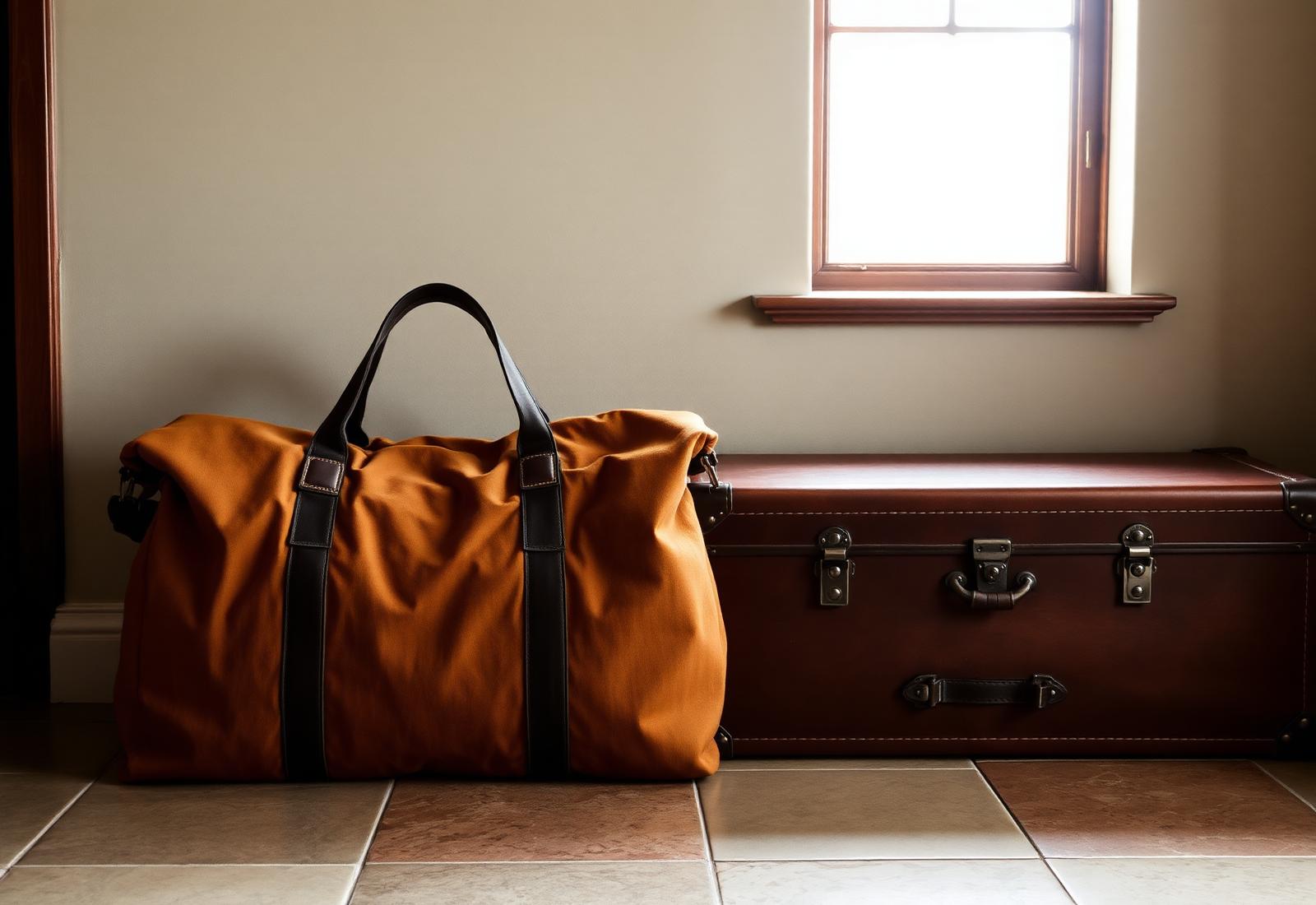
The quiet solution is rarely presented to the guest at all. Long before departure, we pack twice. The safari duffel travels with the family. The larger cases, holding evening wear, boots, ski layers, and everything else that belongs to the second half of the trip, are collected from the home, held with a trusted logistics partner, and forwarded ahead of arrival in Zurich. When the family lands in Switzerland, everything is already unpacked in the chalet. The wardrobe change appears effortless because, from the guest's point of view, it never happened at all.
Anticipation is the discipline
None of this is improvised. Every one of these decisions is made in the weeks before departure, by people the client will never meet. The aircraft. The strip. The operator. The bag. The forwarding. The transfer. The second set of drivers standing quietly at the FBO in Zurich. Most of these decisions are made without ever being raised with the client at all. They are simply handled.
This, in our view, is the true measure of a private travel advisory. Not the aircraft one can charter, nor the addresses one can secure. Those are table stakes. The measure is the quiet judgment applied to problems the client did not know existed, resolved before they had cause to ask.
True luxury is not measured by the aircraft you fly. It is measured by everything you never had to think about.
End of Dispatch
Filed by Mina Shafiee for Inspo Travel · July 8, 2026
About the Series
Quietly Orchestrated is the editorial voice of Inspo Travel.
Written for principals, family offices, entertainers, athletes and executives, and for the small circle of advisors who serve them, each essay examines the mechanics, judgment and craft that separate a good journey from an unforgettable one. We publish irregularly, and only when we have something worth saying.
Coming Next
The next dispatch is being written in the field. Quietly Orchestrated is published only when something is truly worth saying.