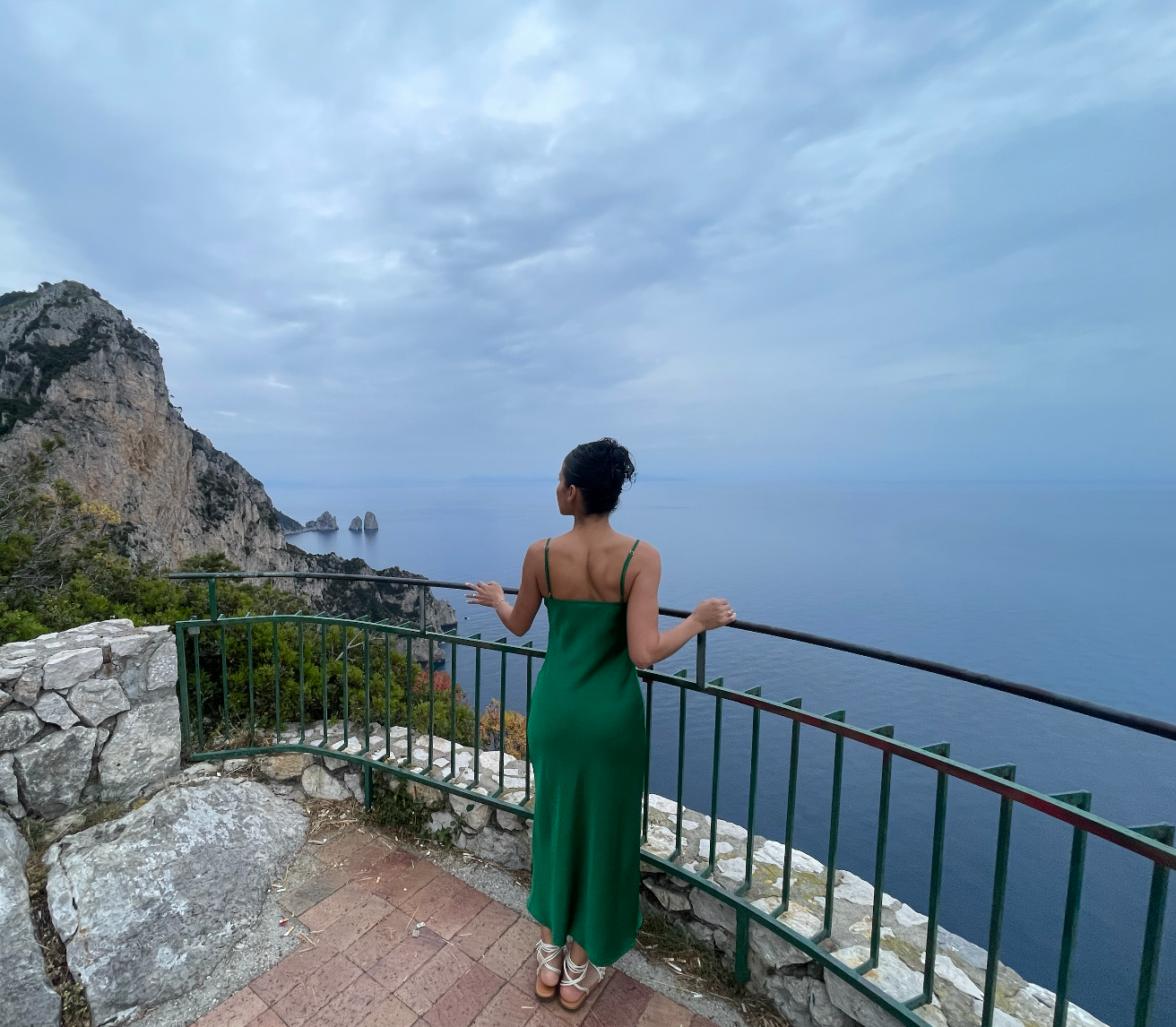
Quietly Orchestrated · No. 04
The Luxury of Leaving Room
Thoughtful travel design is not always about adding more. Sometimes the most intentional decision is knowing what to leave open.
Quietly Orchestrated · No. 04 Observations on the judgment behind thoughtful travel design.
There is a particular kind of freedom that comes from knowing where you're going without needing to know exactly how the day will unfold. For me, some of the most memorable moments in travel have come from the space surrounding the things I planned. The morning without a reservation. The afternoon that didn't need to become anything in particular. The unexpected detour that becomes a favorite memory. Those moments aren't always accidental. Sometimes, the room for them has been deliberately created.
Knowing What to Leave Open
When I was planning our honeymoon, I deliberately left one Wednesday morning in Capri undecided. On our itinerary, I had written:
Sleep in or Blue Grotto.
We were interested in seeing it, but neither of us felt strongly enough to commit to a specific morning before we arrived. I had researched how to visit and understood what would be involved. If we woke up wanting a slow morning, we would have one. If we felt adventurous, we knew what to do. That Wednesday, we lingered over breakfast, looked at each other, and said, "Let's go!" What followed was a wonderfully chaotic experience.
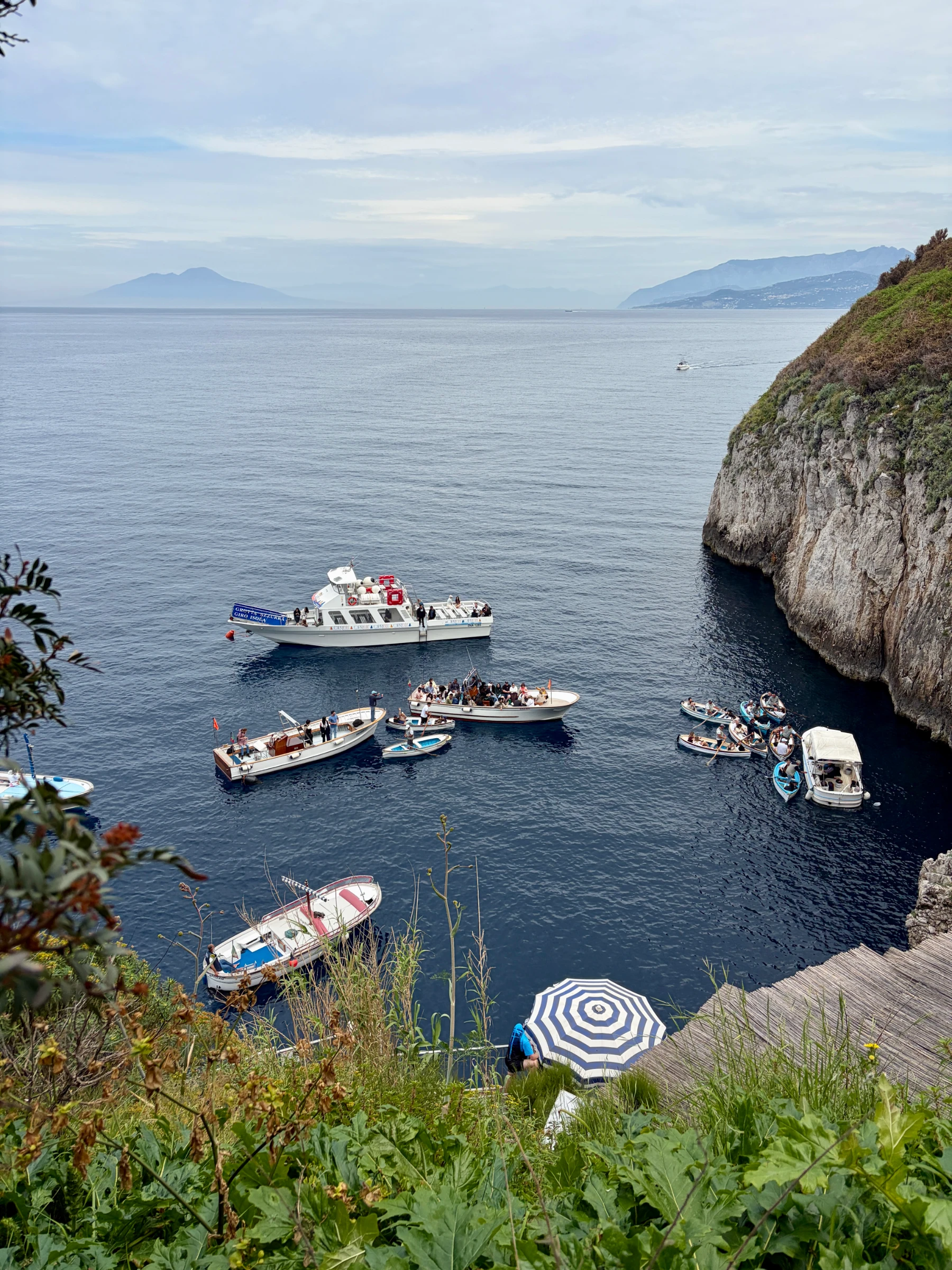
I found myself seated between an older couple and their dog, while my husband, Denis, was positioned on the opposite side. Clear blue skies above us, sparkling blue water around us, and a dog that licked my face as we rocked in a small boat, not quite knowing what would happen next. We were laughing before we even entered the grotto because the whole arrangement was so delightfully absurd. Then came the instruction to duck our heads and practically lie flat as our boat passed through the narrow opening. Inside, everything changed. The water glowed an extraordinary blue, illuminating the cave around us. For a moment, we were silent, completely in awe of what we were seeing. And then our boatman began singing, loudly, in Italian. His voice echoed through the cavern, and when I caught Denis's eyes, we dissolved into laughter all over again. Before we knew it, we were ducking through the entrance once more, climbing out of the boat, and wondering what on earth just happened. We couldn't stop laughing.

The day before, we had enjoyed a beautifully planned beach club day at Il Riccio. We had secured a cliffside table for lunch with an unobstructed view, arranged a special celebration in honor of our honeymoon, and made a separate reservation for sunset aperitivo hour at the rooftop lounge. It was storybook perfect and memorable in an entirely different way. Both days were exactly what we wanted from our time in Capri. One was thoughtfully planned well in advance, while the other was intentionally left open. Neither was better. They simply required different kinds of planning.

What we remember most about the Blue Grotto isn't just the remarkable color of the water. It's the dog, the laughter, the singing, the brief silence, and the ridiculousness of the entire experience.
We could have planned to see the cave. We couldn't have planned to experience it quite like that.
The Space Between Experiences
I think one of the easiest mistakes in planning travel is assuming that every available hour represents an opportunity to add something. A beautiful lunch can become a boat excursion, followed by a private tour, followed by dinner reservations. Each experience may be exceptional on its own. Together, they can begin to feel like a schedule to keep up with. I've always appreciated a different rhythm. After a particularly full day, I like to leave the following morning, or sometimes the entire next day, relatively open. There needs to be time to recover, certainly. But also time to reflect, to absorb where you are, and to enjoy the simple pleasure of being somewhere without immediately moving on to the next thing. Sometimes that simply means sipping coffee on the balcony, soaking in your surroundings. There is value in allowing a journey to breathe.
The Intention Behind the Freedom
Some experiences deserve to be secured well in advance. A difficult-to-book restaurant, a particular guide, or an experience that carries special meaning for the traveler. These become the anchors around which a journey can take shape. But not every possibility needs to become a commitment. The Blue Grotto was something we wanted the option to experience, not something we needed to build our day around. The research was done and the logistics were understood in advance, but the decision could wait until we knew how we felt that morning. That distinction matters.
Leaving something open doesn't mean leaving it unconsidered.
The reservations that need securing have been made. Transportation has been considered. The possibilities have been researched, with an understanding of what requires advance planning and what can realistically be arranged on the day. That type of preparation makes spontaneity possible without turning it into another logistical task. Thoughtful travel planning isn't necessarily about deciding everything in advance. It's about understanding which decisions need to be made ahead of time and which ones can be left to the moment. Taking care of those details allows travelers to settle into the experience without worrying about what's coming next. And then, just as importantly, there is room. Room to wander. Room to change your mind. Room to spend an afternoon doing less than you thought you would.
This is where restraint becomes part of thoughtful travel design. Not in withholding experiences, but in recognizing that adding something isn't always an improvement.
A journey can be beautifully considered without being entirely prescribed.
Perhaps that's the luxury of leaving room: knowing that the important things have been taken care of, leaving you free to notice the beauty around you and be surprised by everything in between. Because sometimes the moments we remember most aren't the ones we planned.
They're the ones we made space for.
End of Dispatch Written by Dru Filed by Inspo Travel
About the Series
Quietly Orchestrated is the editorial publication of Inspo Travel. Written for principals, family offices, entertainers, athletes, executives, and the trusted advisors who support them, each dispatch explores the judgment, preparation, and invisible craftsmanship that transform travel from a reservation into an experience. We publish irregularly — and only when we have something worth saying.
End of Dispatch
Filed by Mina Shafiee for Inspo Travel · October 23, 2026
About the Series
Quietly Orchestrated is the editorial voice of Inspo Travel.
Written for principals, family offices, entertainers, athletes and executives, and for the small circle of advisors who serve them, each essay examines the mechanics, judgment and craft that separate a good journey from an unforgettable one. We publish irregularly, and only when we have something worth saying.
Next in the Series
No. 03 · On Orchestration